

Brand guidelines (also called a corporate identity manual) are the document that defines how your brand looks, sounds and behaves on any medium. They are the difference between a consistent brand and a logo that every supplier uses however they see fit.
At our branding studio we say it all the time: the logo is the starting point, not the finish line. These are the 7 elements every serious set of brand guidelines should cover.
The 7 elements of a corporate identity manual
- 1. Logo construction: versions (primary, secondary, symbol), clear space, minimum sizes and incorrect uses.
- 2. Colour palette: primary and supporting colours with their exact codes (Pantone, CMYK, RGB and HEX). No codes, no consistency.
- 3. Typography: font families for headlines and body text, permitted weights and fallback fonts for office software.
- 4. Photographic style and iconography: which images represent the brand and which don’t.
- 5. Voice and tone: how the brand writes: friendly or formal, technical or accessible, with examples of dos and don’ts.
- 6. Applications: stationery, email signatures, social media, signage, vehicles, uniforms or merchandising.
- 7. Coexistence with other brands: how your logo behaves alongside sponsors, badges or partners.
What they’re for day to day (with a real example)
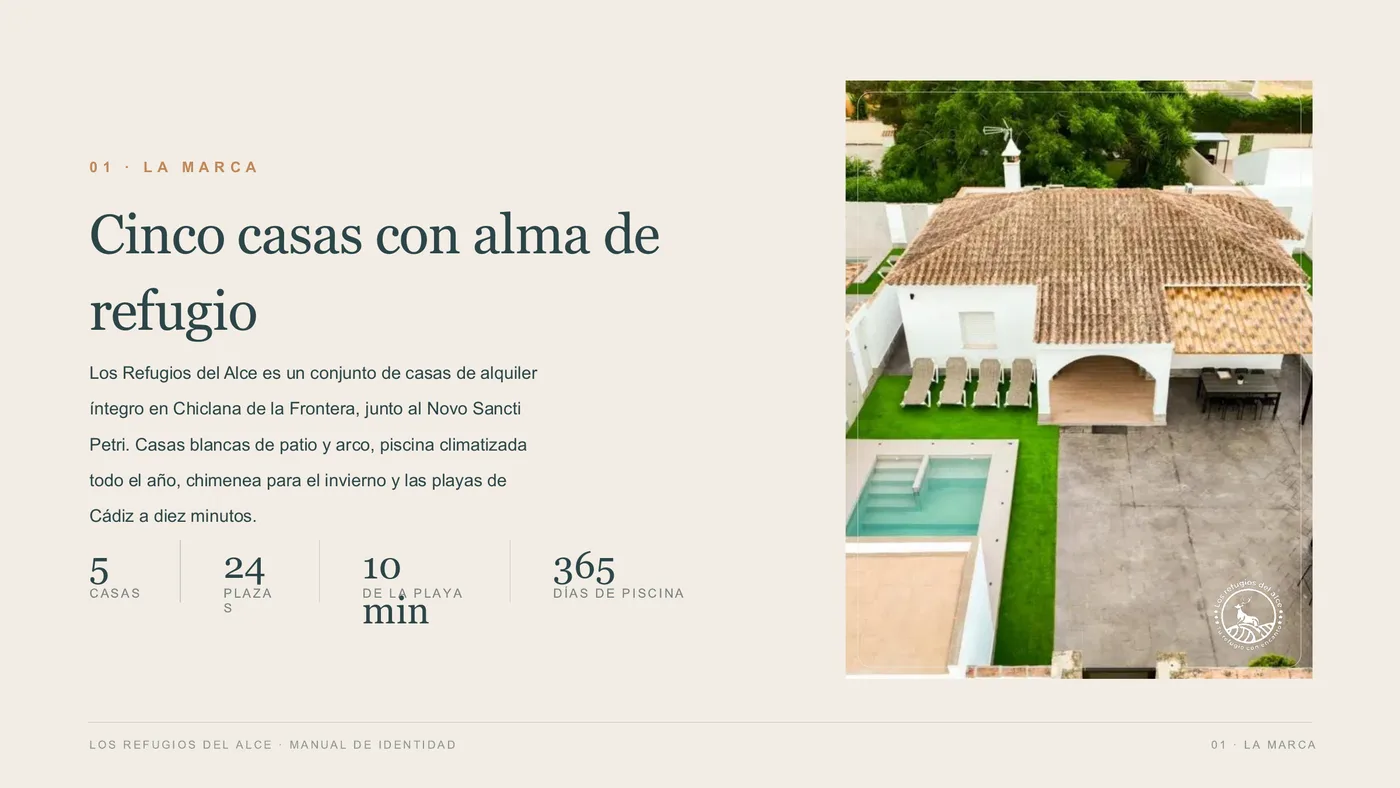
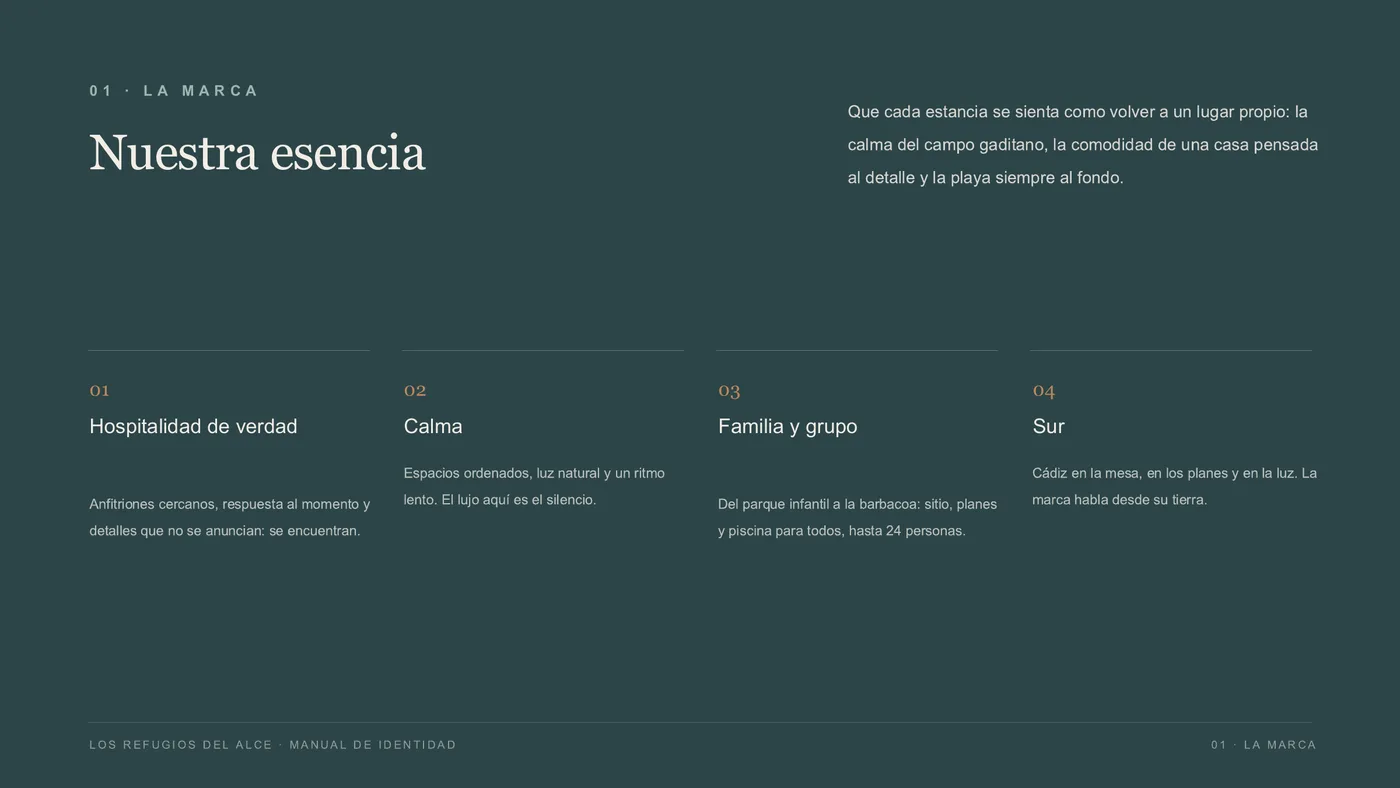
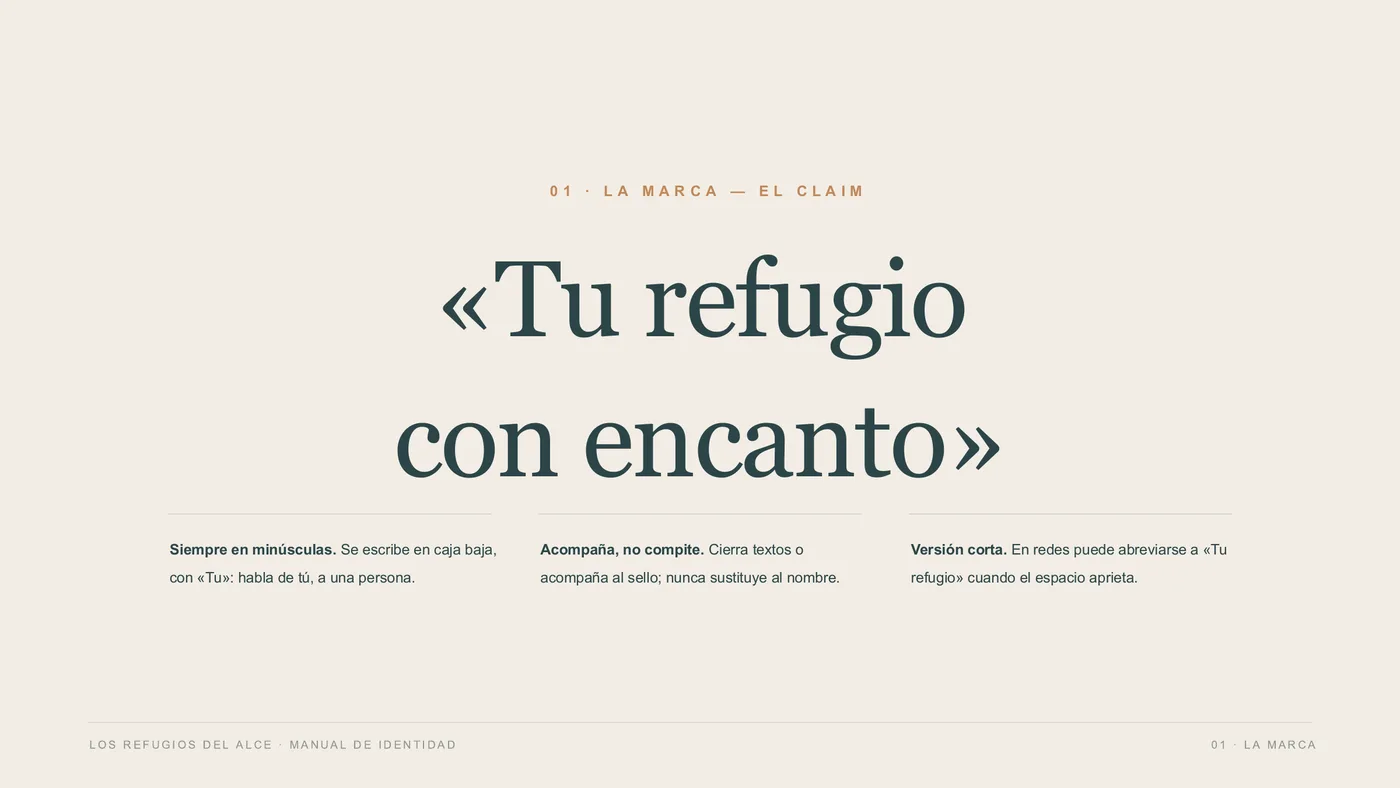
For Los Refugios del Alce, a rural tourism project, we created the brand and a complete manual: naming, symbol, a palette inspired by the surroundings and application rules from signage to Instagram. The result is that any piece (a banner, a post, a breakfast menu) looks like it came from the same hand. You can see the project in our portfolio.
That is the return on a manual: speed and consistency. Every new design doesn’t start from scratch, and every supplier (printer, signmaker, developer) gets clear rules instead of a “you figure it out”. Over time, consistency is what builds recognition, and recognition is what makes a real corporate identity.

How much brand guidelines cost, and how much they save
Professional brand guidelines for an SME typically run between €1,500 and €6,000 depending on depth, almost always as part of a full identity project. It looks like an avoidable expense until you work out the opposite: every piece redone because of inconsistency, every hour of back-and-forth with the printer and every campaign that “doesn’t feel like the brand” costs more than the document that would have prevented it.
Our practical advice: always ask for the manual as an editable deliverable, plus a short 2-3 page version for suppliers. The full manual organises the brand; the quick guide is the one that actually circulates and gets used every day. Together, they are what keeps the brand intact through the years and through team changes.
Frequently asked questions about brand guidelines
What is a corporate identity manual?
A rulebook that sets out all of a brand’s visual and verbal elements (logo, colours, typography, style, voice) and the rules for applying them correctly on any medium.
How many pages should it have?
It depends on the size of the brand: from 15-20 pages for an SME to more than 100 for a corporation. What matters isn’t the thickness, but that it solves the real, everyday use cases.
What’s the difference between an identity manual and a brand book?
The identity manual is normative (how to apply the brand); the brand book adds the strategic side: purpose, values, personality and positioning. Ideally, a single document covers both.
How often should it be updated?
When the brand evolves: new media (an app, a new social channel), redesigns or extensions of the brand architecture. Reviewing it every 3-5 years is a good habit.
If your brand still lives in a ZIP file with “logo_final_v3.png”, it’s time to put it in order. We design complete identities with their manuals: tell us about your project on the contact page or take a look at our graphic design service first.